

Tempered Anvil
AD:
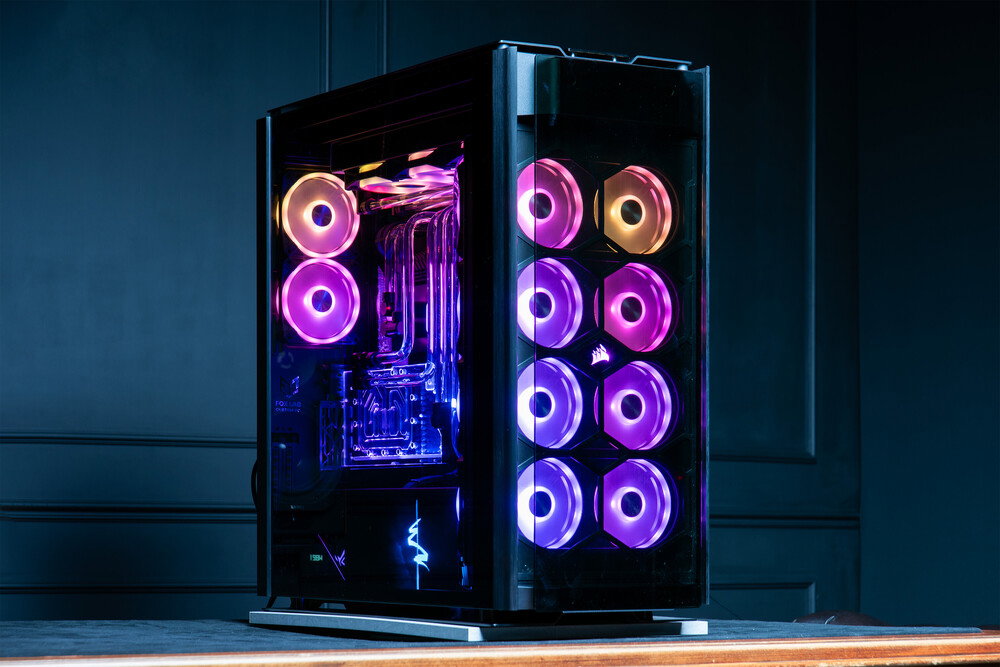
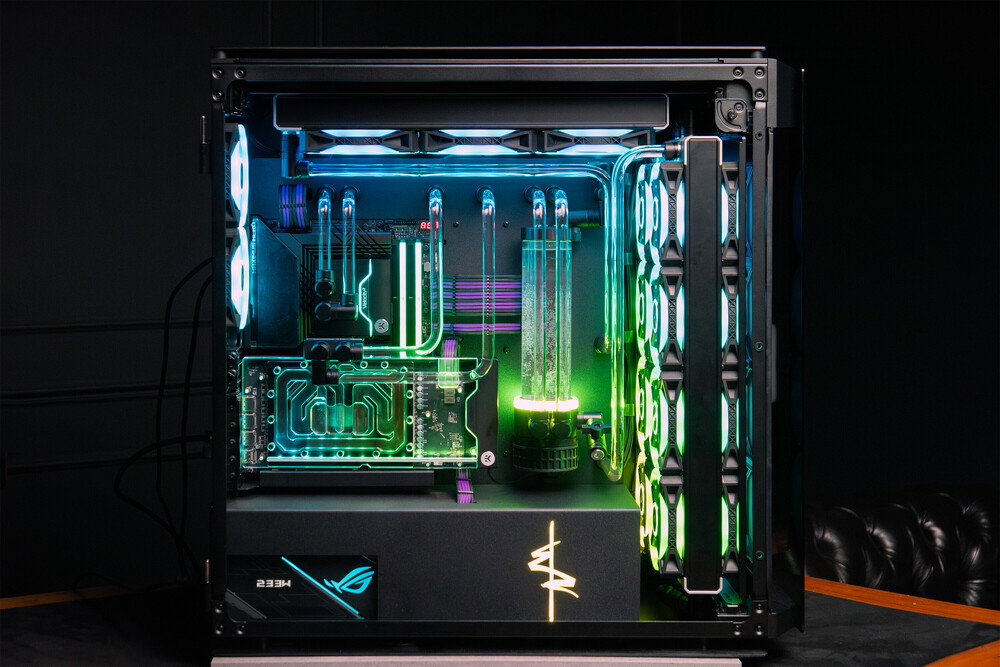
Today I’ll show one of the largest-scale projects we’ve ever assembled: a gaming PC built in the massive Corsair Obsidian 1000D case.
From the start, this build was designed for powerful hardware and a huge custom hardline water-cooling system capable of keeping noise low and performance high with virtually any components. It also features major visual modifications and a large amount of clean, synchronized lighting.
The project used some of the newest hardware available at the time: an Intel Core i7-13700K processor and an RTX 4090 graphics card. We’ll go through the build step by step: the components, the water-cooling loop, the custom panels, the lighting setup, and the final result.
Components
The components were chosen with little concern for cost, focusing instead on performance and overall balance. As a result, almost everything in the system is flagship or near-flagship level.
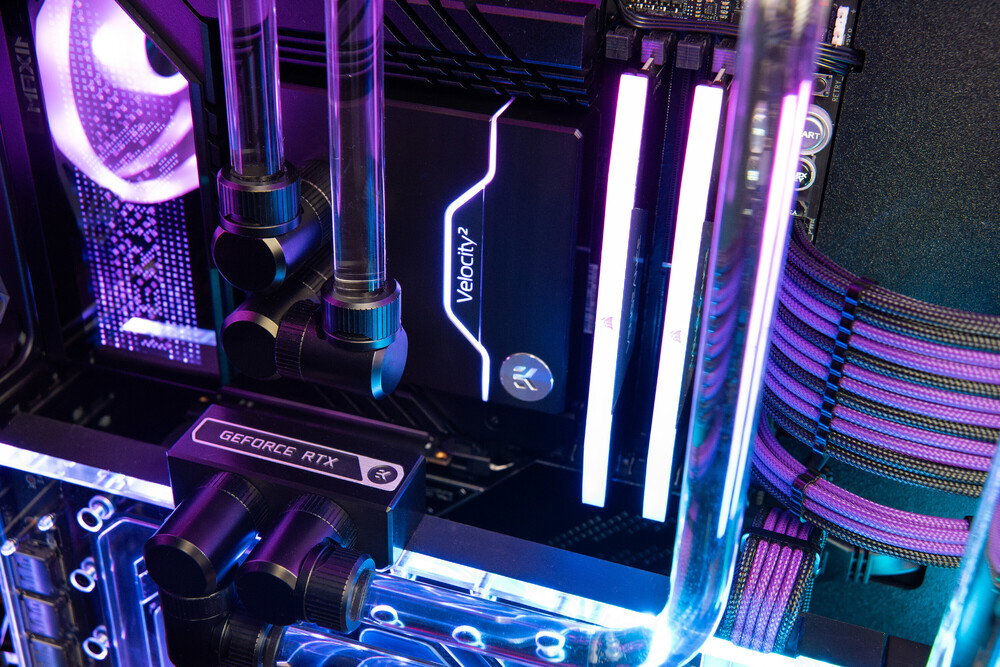
The build is based on an ASUS ROG MAXIMUS HERO Z690 motherboard. At its core is an Intel Core i7-13700K processor paired with 64 GB of high-frequency Corsair Vengeance RAM. Graphics are handled by an MSI RTX 4090 SUPRIM. Storage is provided by a 4 TB Samsung 990 EVO SSD. The system is powered by an ROG Thor Platinum 1200W power supply with controllable lighting, and everything is assembled inside the enormous Corsair Obsidian 1000D case.
Water-Cooling System
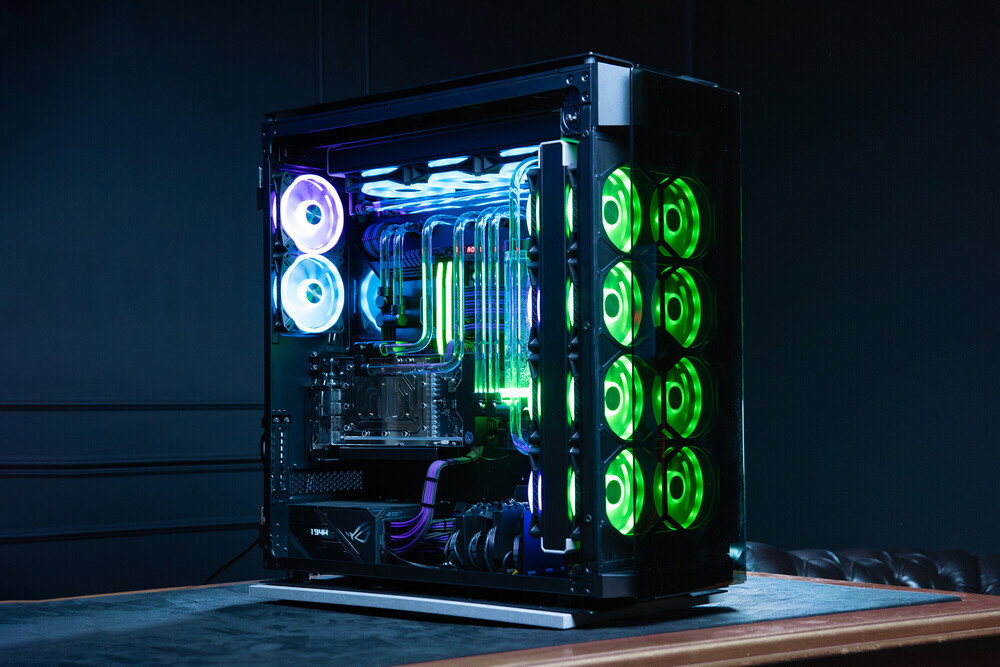
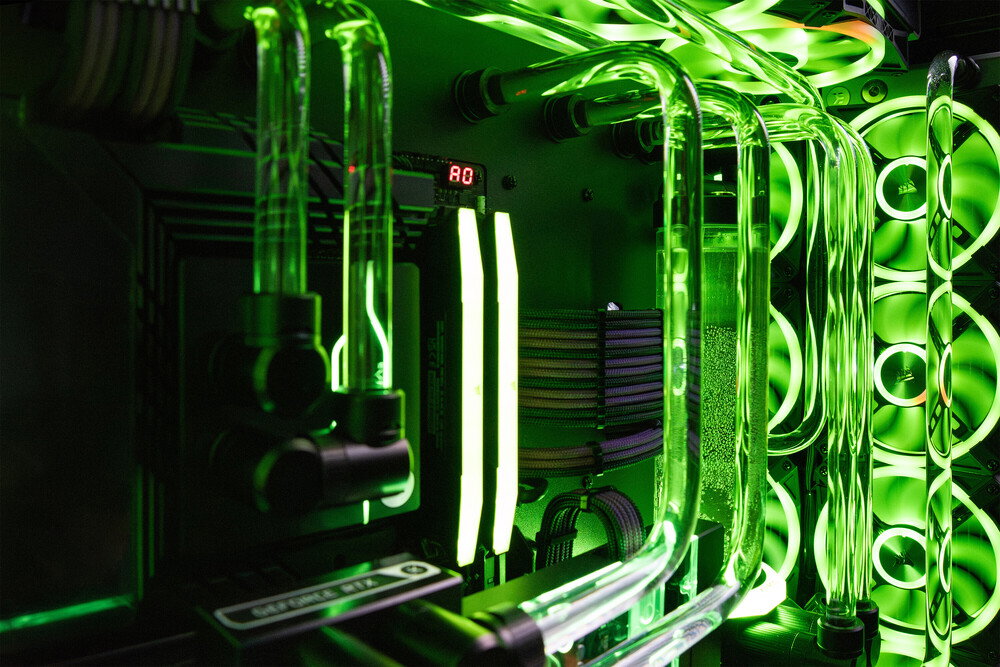
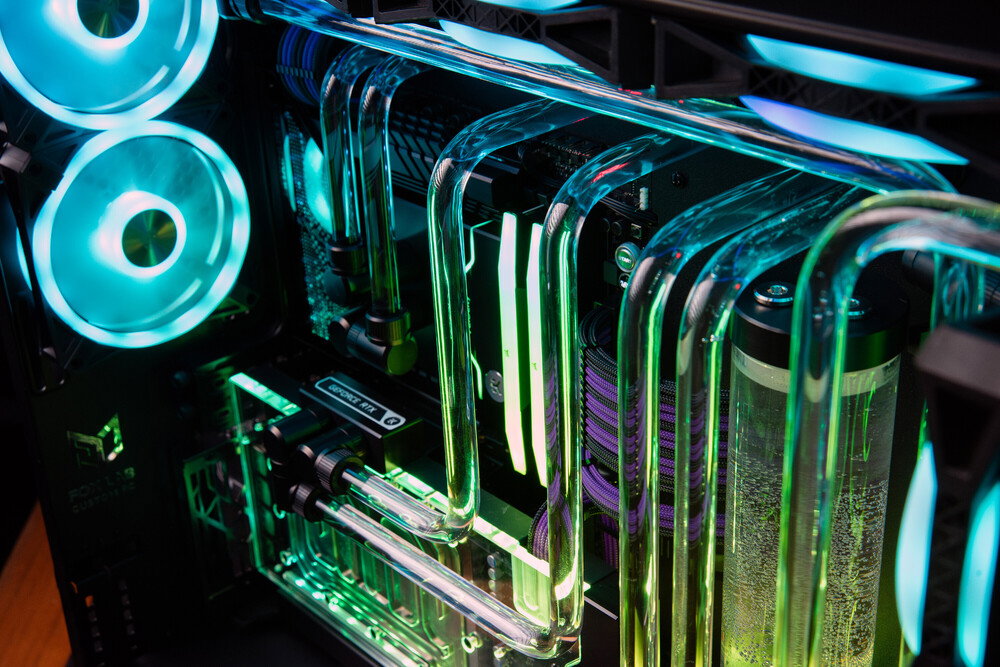
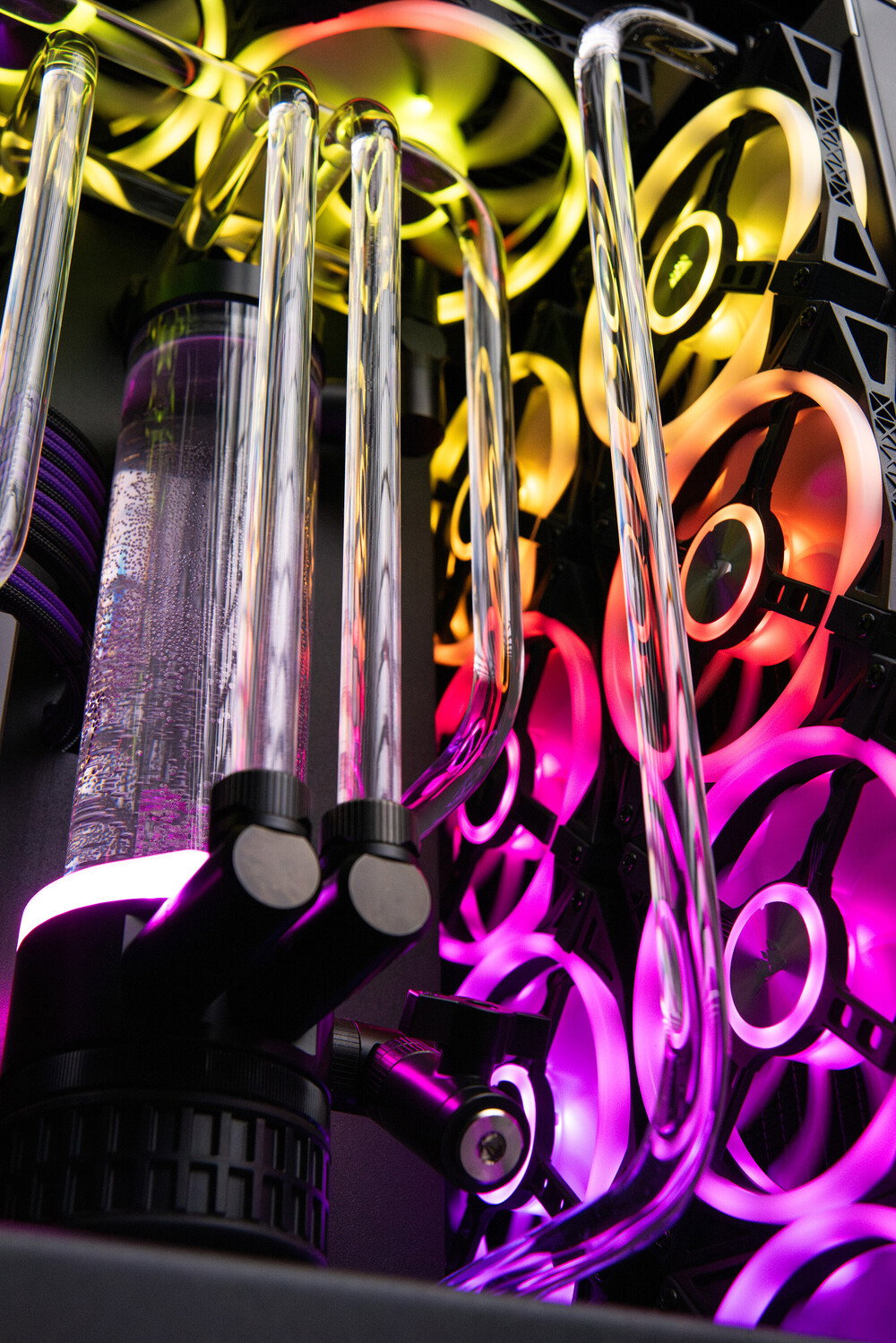
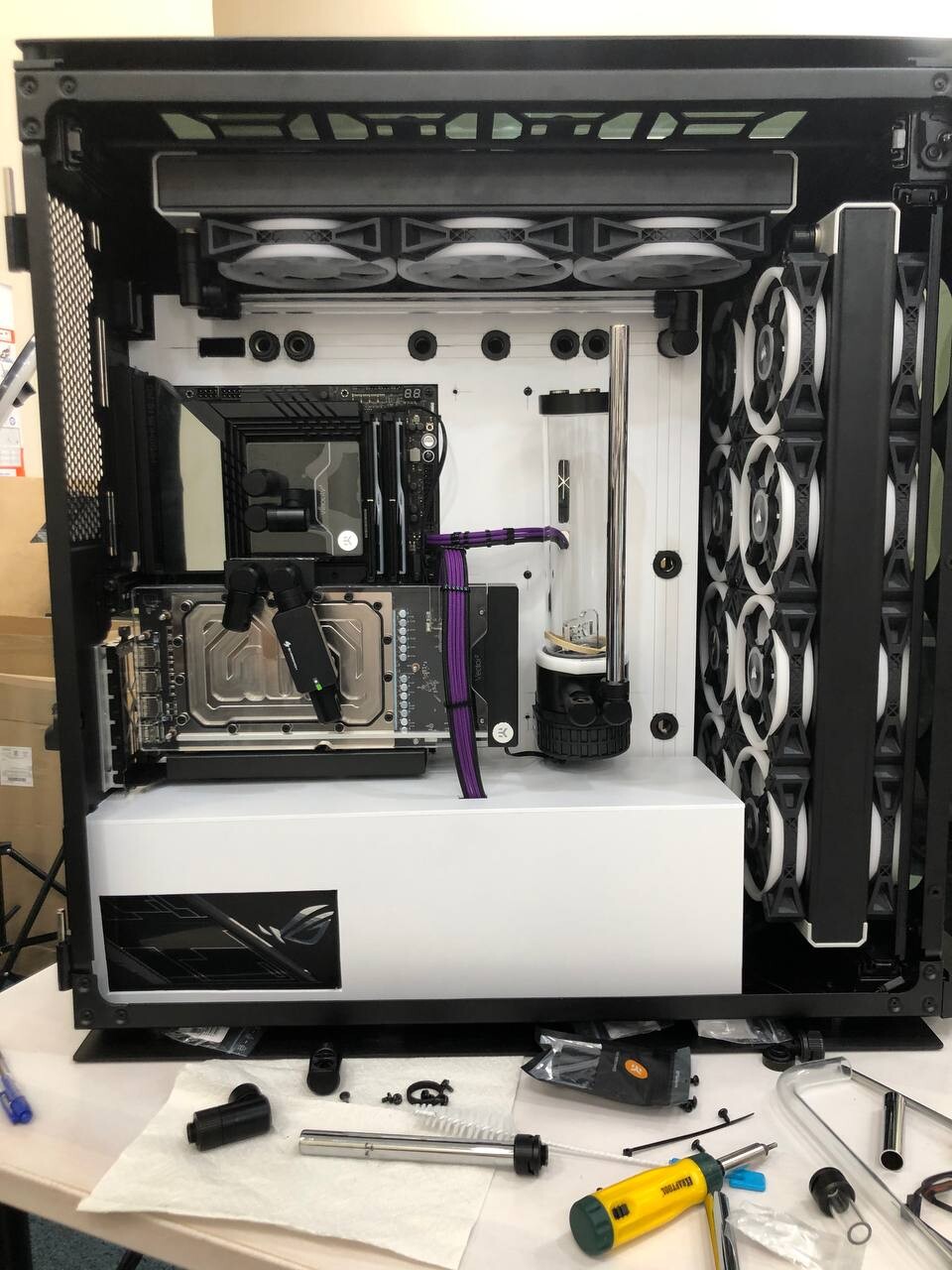
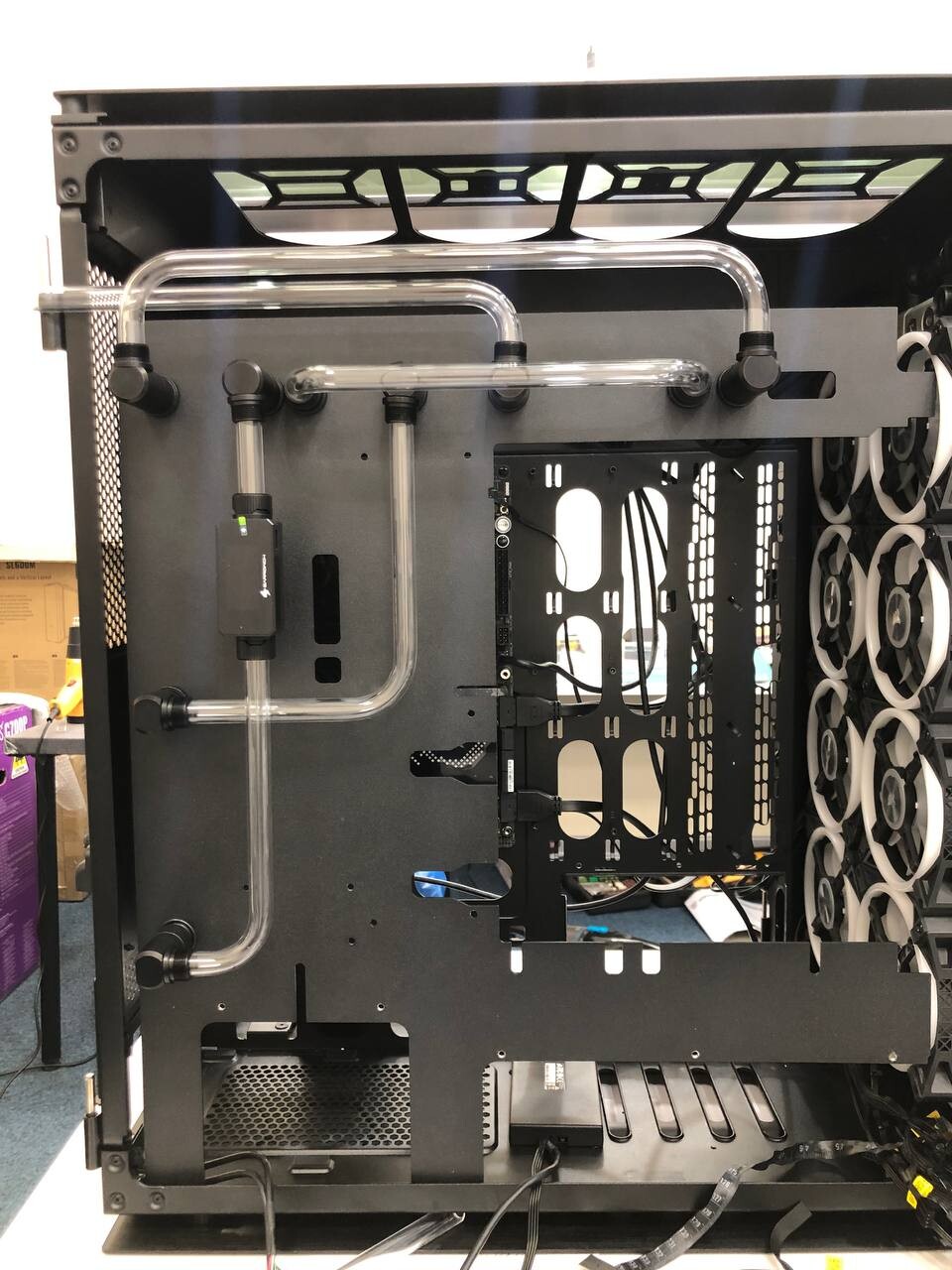
The main highlight is the custom water-cooling system. This PC uses a full custom liquid-cooling loop built with 14 mm acrylic hard tubes. The loop is very large, with many passthrough fittings and connections — around 15 tubes in total.
It also includes four drain valves. Because of the computer’s size, weight, and loop complexity, draining it is not exactly easy, so the extra drain points make maintenance much more practical.
EK water blocks were chosen for the CPU and GPU, as they are among the highest-performing options available. The system has three radiators: two 480 mm radiators and one 420 mm radiator at the top. This gives the build a huge heat-dissipation reserve, allowing the fans to stay below 1,000 RPM.
In total, the system has 21 fans, plus one more in the power supply. The fans were chosen mostly for their appearance and attractive lighting.
The loop includes four temperature sensors, with readings sent to Corsair iCUE software. This allows real-time monitoring in different parts of the loop and makes it possible to adjust fan and pump speeds accordingly. A separate flow-rate sensor with its own display is also installed.
Despite the size of the system, hydraulic resistance is not too high, so the entire loop is handled perfectly by a single pump. Even at low RPM, the flow remains sufficient, allowing the pump to run quietly. Overall, this is one of the most effective cooling configurations possible inside a single case.
Case Modifications
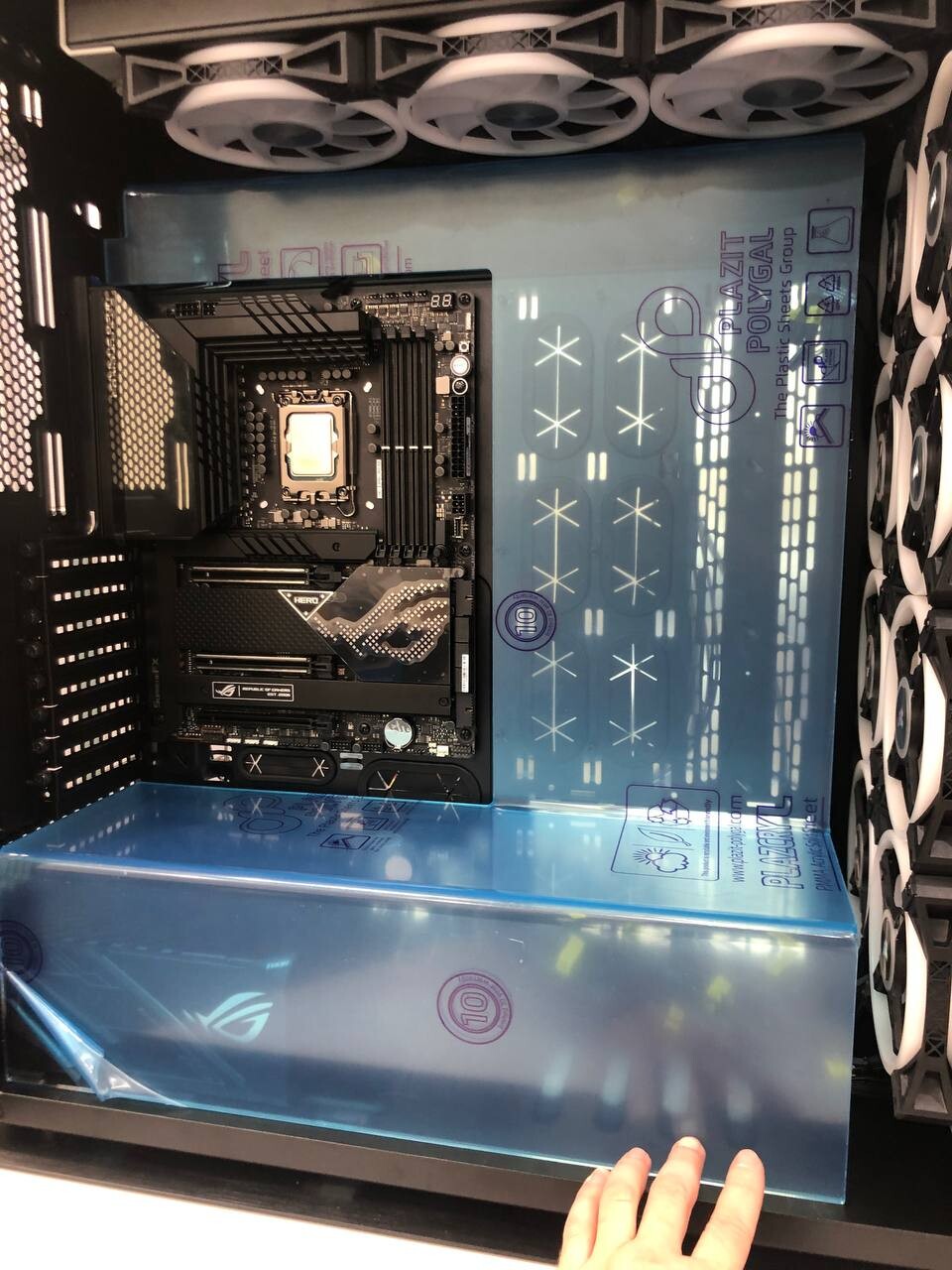
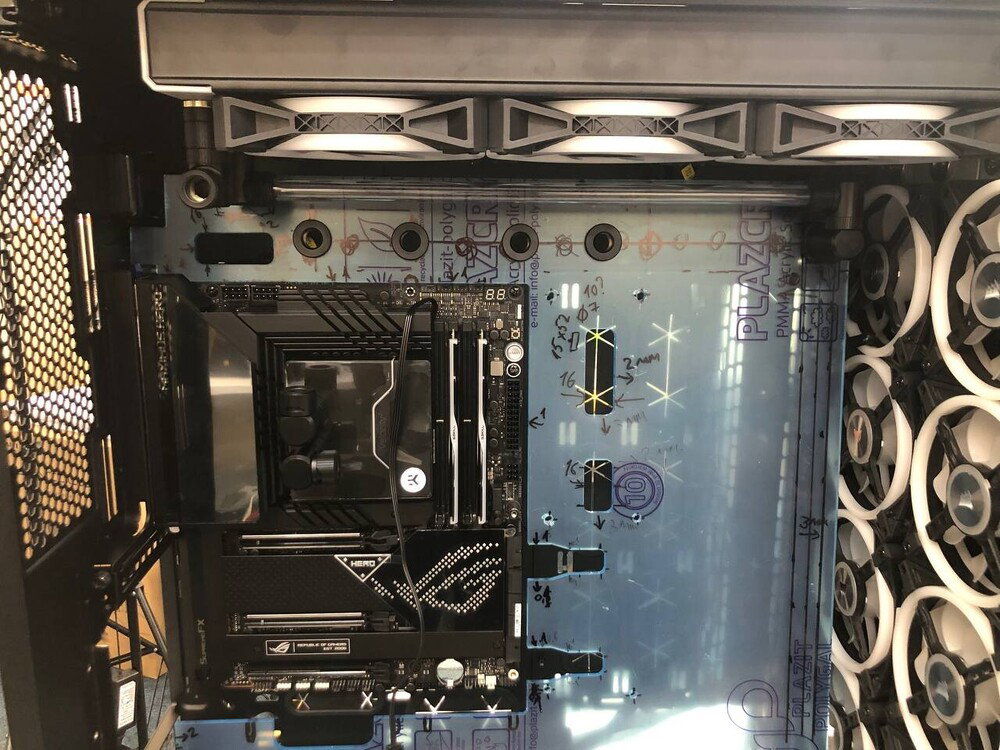
A major part of the project was the custom panels designed specifically for this build.
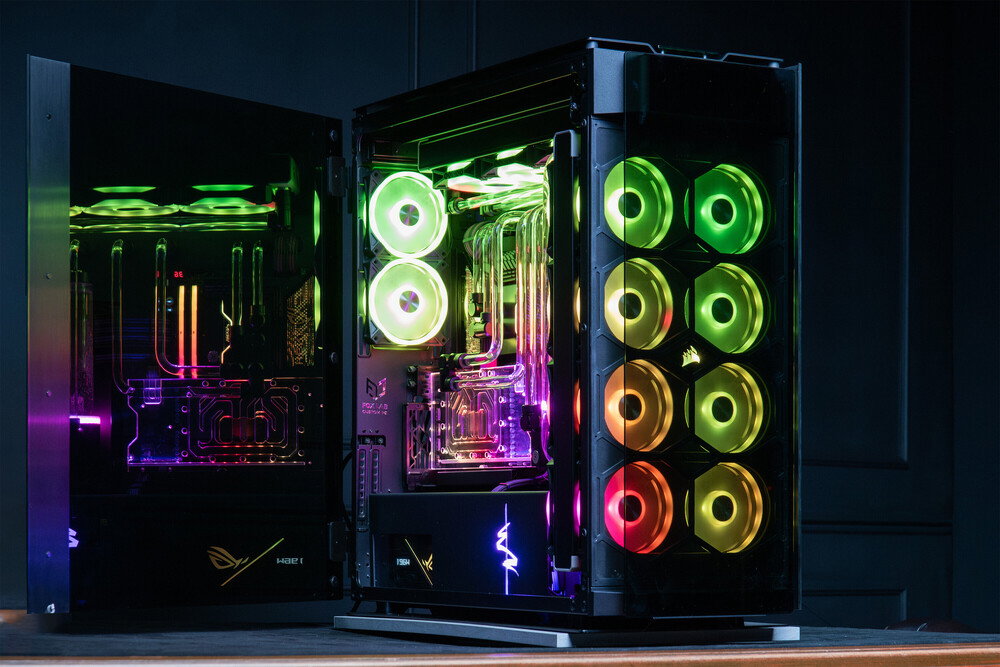
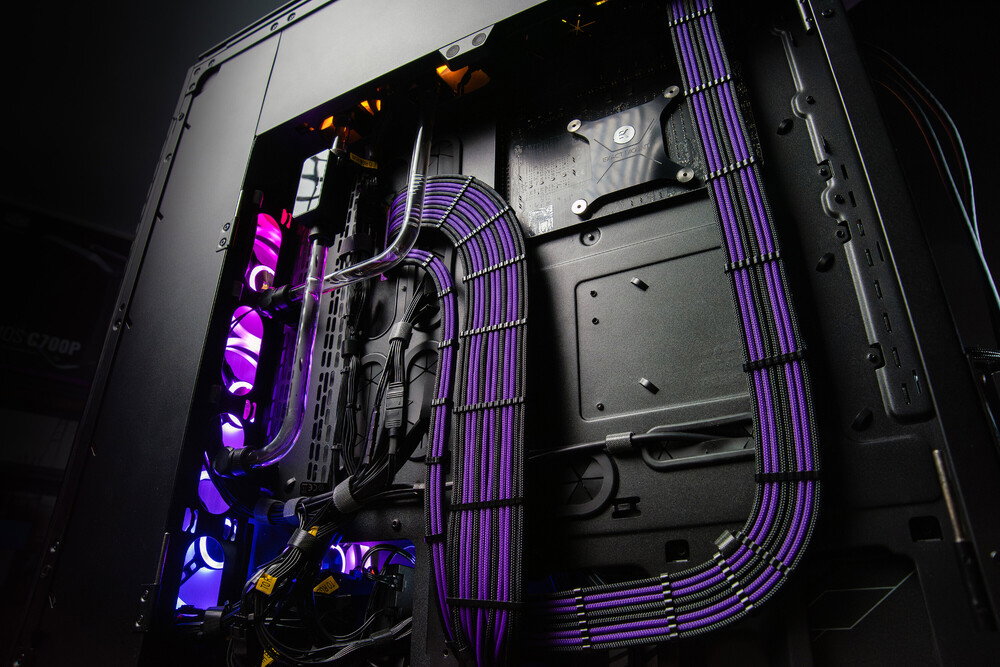
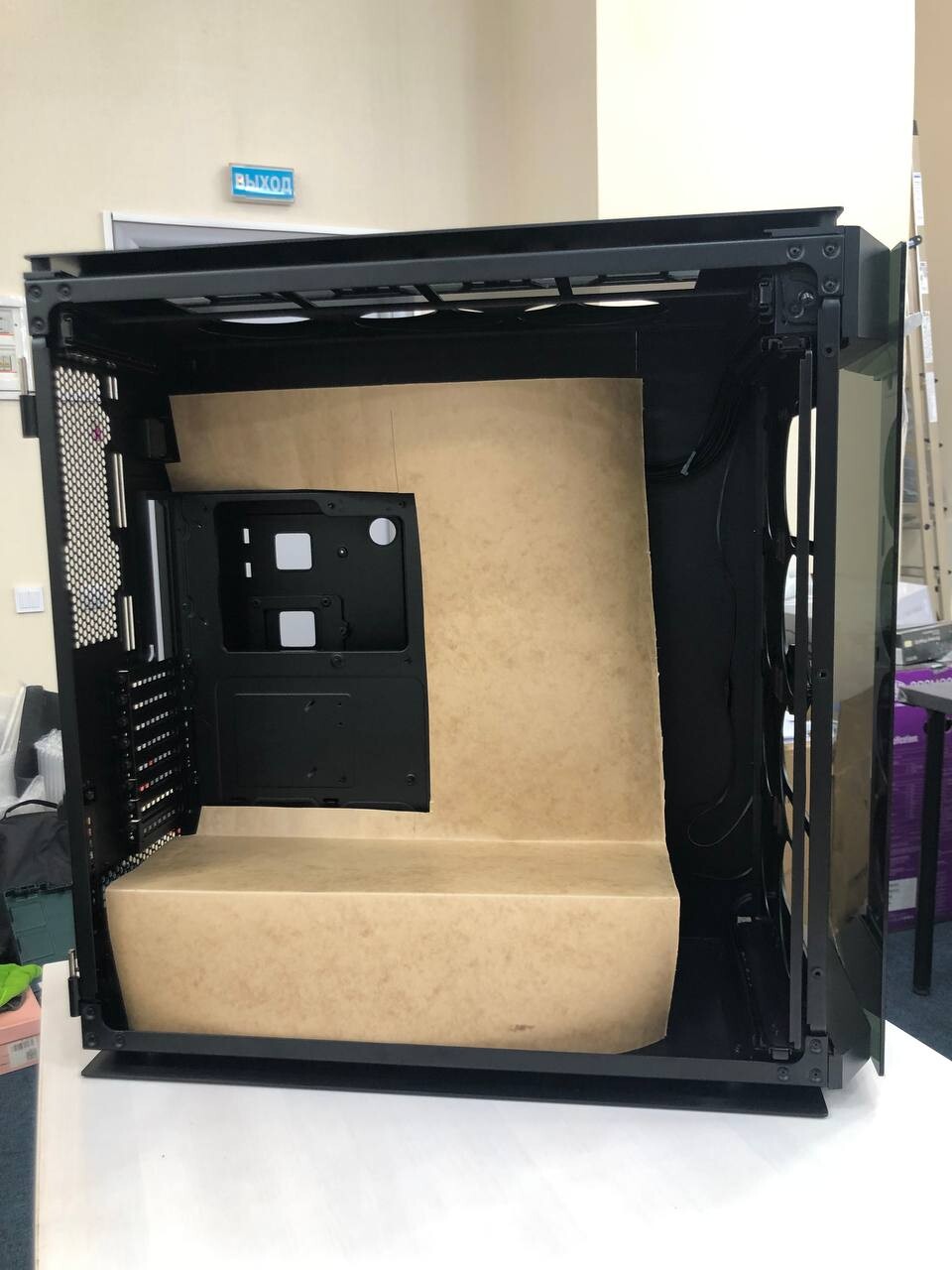
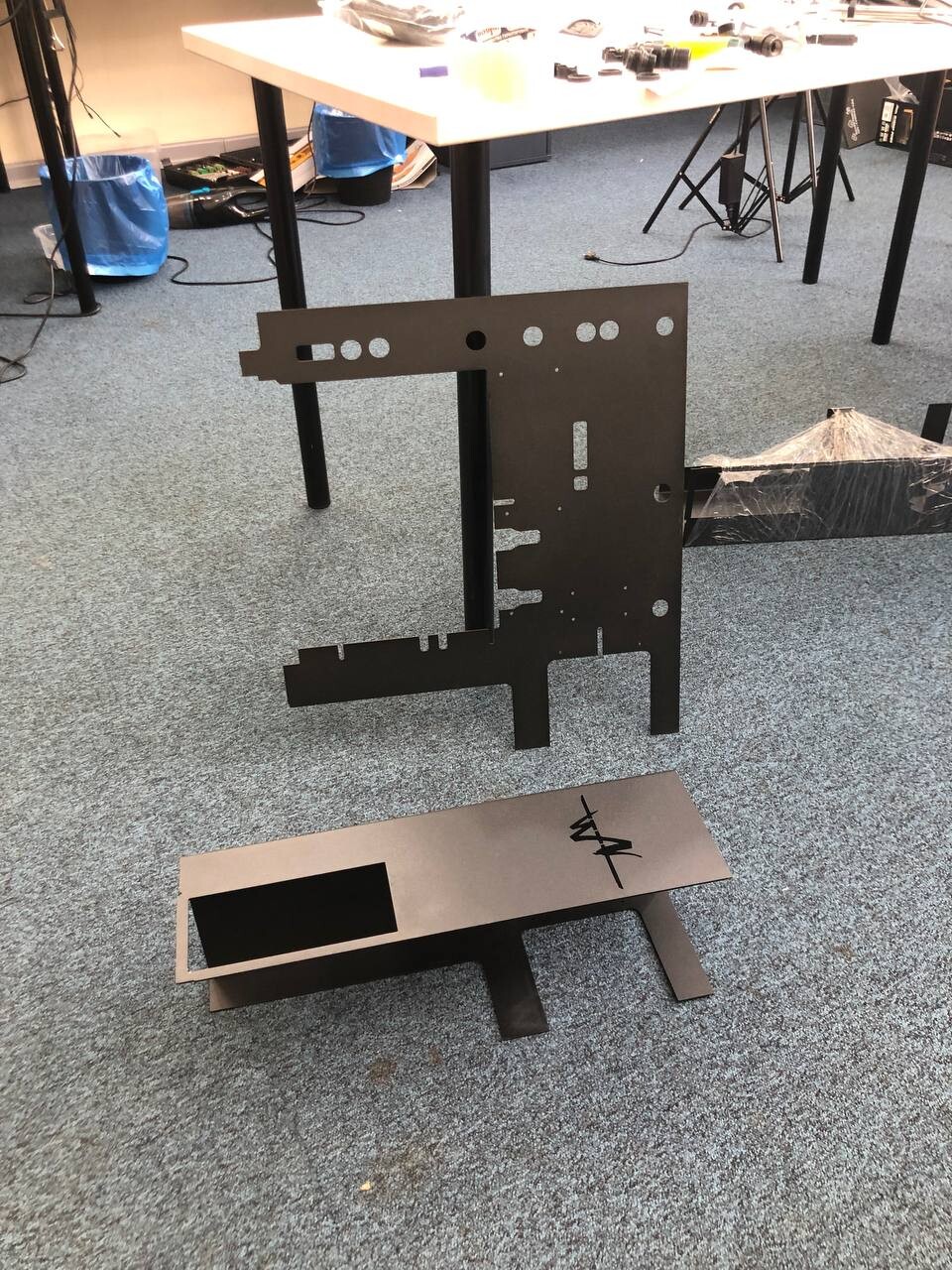
Two main panels were installed. The first is a vertical panel that extends the motherboard area and effectively divides the case in half, covering and organizing the internal space. The second is a PSU shroud panel, which covers the lower section and hides the large number of cables and controllers.
The tube routing is tied to the vertical panel, so it has to be completely stable with no movement at all. The heavy pump and reservoir are also mounted to it. For rigidity and reliability, these panels were made from 1,5 mm steel instead of acrylic, which is more common in custom builds.
First, we designed and test-fitted acrylic templates. Only after that did we order the final steel panels and factory painting.
We also added a small lightbox to the lower panel: Martinez’s emblem from Cyberpunk: Edgerunners. This detail gives the build more character and makes it stand out visually.
Lighting Organization
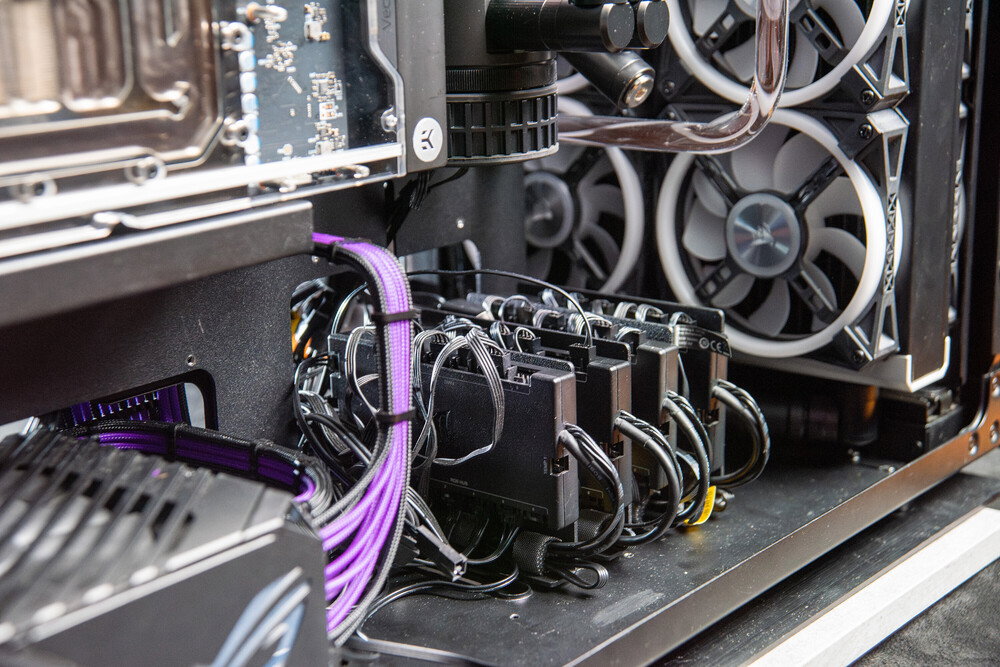
To make the build look cohesive, we paid special attention to the lighting setup. Airflow through the radiators and case is handled by 21 Corsair QL-series fans, controlled by four Corsair Commander controllers.
The hubs are hidden under the PSU shroud, with 42 fan cables running into the control system. Routing them neatly was a serious challenge. Each fan cable was adjusted to the required length: some were shortened, while others were extended and re-crimped.
Lighting is controlled through SignalRGB software, with a custom lighting scheme created for this build. As a result, every one of the three dozen lighting elements — regardless of manufacturer — works harmoniously with hundreds of custom effects.
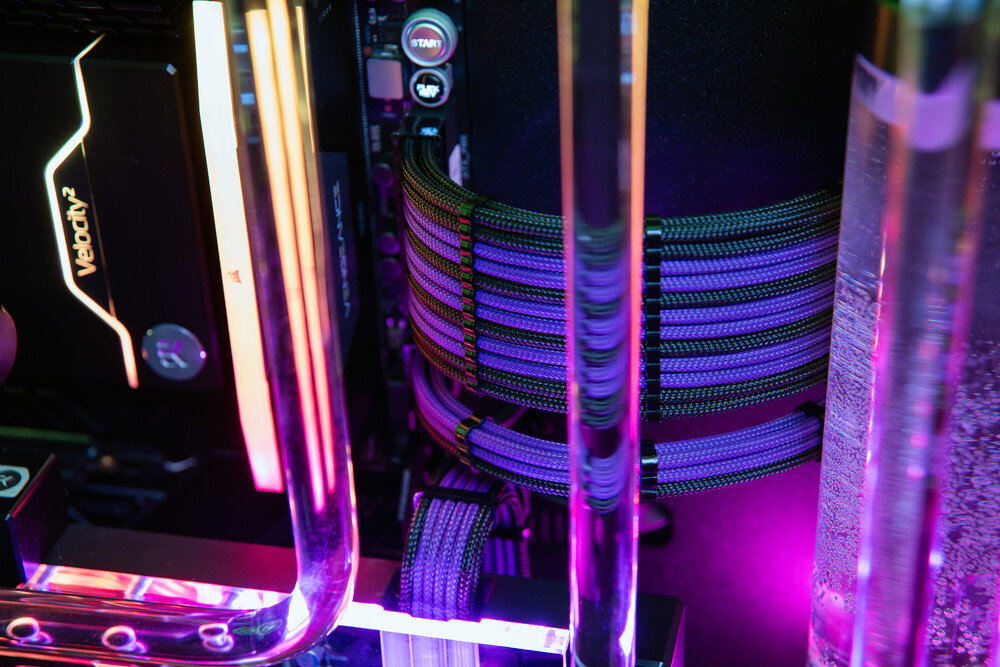
A complete set of power cables was also made specifically for this project. They are mounted in cable combs, hold their shape well, and keep the layout clean.
To keep everything secure and easy to service, we made special brackets for the hubs and mounted them with magnets. When access is needed, they can be removed, serviced, and placed back quickly.
Results
The result is a large, carefully planned project based on the Corsair Obsidian 1000D, featuring:
— top-tier components;
— a massive custom hardline cooling loop;
— three large radiators, temperature sensors, and a flow-rate sensor with monitoring and control;
— easier maintenance thanks to four drain valves;
— custom steel panels that are not just for looks, but also maintain geometry and support heavy components;
— custom cables, a clean layout, and a unified lighting style.
Any questions are welcome.
From the start, this build was designed for powerful hardware and a huge custom hardline water-cooling system capable of keeping noise low and performance high with virtually any components. It also features major visual modifications and a large amount of clean, synchronized lighting.
The project used some of the newest hardware available at the time: an Intel Core i7-13700K processor and an RTX 4090 graphics card. We’ll go through the build step by step: the components, the water-cooling loop, the custom panels, the lighting setup, and the final result.
Components
The components were chosen with little concern for cost, focusing instead on performance and overall balance. As a result, almost everything in the system is flagship or near-flagship level.
The build is based on an ASUS ROG MAXIMUS HERO Z690 motherboard. At its core is an Intel Core i7-13700K processor paired with 64 GB of high-frequency Corsair Vengeance RAM. Graphics are handled by an MSI RTX 4090 SUPRIM. Storage is provided by a 4 TB Samsung 990 EVO SSD. The system is powered by an ROG Thor Platinum 1200W power supply with controllable lighting, and everything is assembled inside the enormous Corsair Obsidian 1000D case.
Water-Cooling System
The main highlight is the custom water-cooling system. This PC uses a full custom liquid-cooling loop built with 14 mm acrylic hard tubes. The loop is very large, with many passthrough fittings and connections — around 15 tubes in total.
It also includes four drain valves. Because of the computer’s size, weight, and loop complexity, draining it is not exactly easy, so the extra drain points make maintenance much more practical.
EK water blocks were chosen for the CPU and GPU, as they are among the highest-performing options available. The system has three radiators: two 480 mm radiators and one 420 mm radiator at the top. This gives the build a huge heat-dissipation reserve, allowing the fans to stay below 1,000 RPM.
In total, the system has 21 fans, plus one more in the power supply. The fans were chosen mostly for their appearance and attractive lighting.
The loop includes four temperature sensors, with readings sent to Corsair iCUE software. This allows real-time monitoring in different parts of the loop and makes it possible to adjust fan and pump speeds accordingly. A separate flow-rate sensor with its own display is also installed.
Despite the size of the system, hydraulic resistance is not too high, so the entire loop is handled perfectly by a single pump. Even at low RPM, the flow remains sufficient, allowing the pump to run quietly. Overall, this is one of the most effective cooling configurations possible inside a single case.
Case Modifications
A major part of the project was the custom panels designed specifically for this build.
Two main panels were installed. The first is a vertical panel that extends the motherboard area and effectively divides the case in half, covering and organizing the internal space. The second is a PSU shroud panel, which covers the lower section and hides the large number of cables and controllers.
The tube routing is tied to the vertical panel, so it has to be completely stable with no movement at all. The heavy pump and reservoir are also mounted to it. For rigidity and reliability, these panels were made from 1,5 mm steel instead of acrylic, which is more common in custom builds.
First, we designed and test-fitted acrylic templates. Only after that did we order the final steel panels and factory painting.
We also added a small lightbox to the lower panel: Martinez’s emblem from Cyberpunk: Edgerunners. This detail gives the build more character and makes it stand out visually.
Lighting Organization
To make the build look cohesive, we paid special attention to the lighting setup. Airflow through the radiators and case is handled by 21 Corsair QL-series fans, controlled by four Corsair Commander controllers.
The hubs are hidden under the PSU shroud, with 42 fan cables running into the control system. Routing them neatly was a serious challenge. Each fan cable was adjusted to the required length: some were shortened, while others were extended and re-crimped.
Lighting is controlled through SignalRGB software, with a custom lighting scheme created for this build. As a result, every one of the three dozen lighting elements — regardless of manufacturer — works harmoniously with hundreds of custom effects.
A complete set of power cables was also made specifically for this project. They are mounted in cable combs, hold their shape well, and keep the layout clean.
To keep everything secure and easy to service, we made special brackets for the hubs and mounted them with magnets. When access is needed, they can be removed, serviced, and placed back quickly.
Results
The result is a large, carefully planned project based on the Corsair Obsidian 1000D, featuring:
— top-tier components;
— a massive custom hardline cooling loop;
— three large radiators, temperature sensors, and a flow-rate sensor with monitoring and control;
— easier maintenance thanks to four drain valves;
— custom steel panels that are not just for looks, but also maintain geometry and support heavy components;
— custom cables, a clean layout, and a unified lighting style.
Any questions are welcome.
Color(s): Black
RGB Lighting? Yes
Theme: Video Game
Cooling: Custom Liquid Cooling
Size: XL-ATX
Type: General Build
Hardware
CPU
$ 447.79
Motherboard
Memory
$ 462.23
Graphics
$ 3,498.00
Storage
$ 474.99
PSU
Case
$ 524.99
Approved by: